
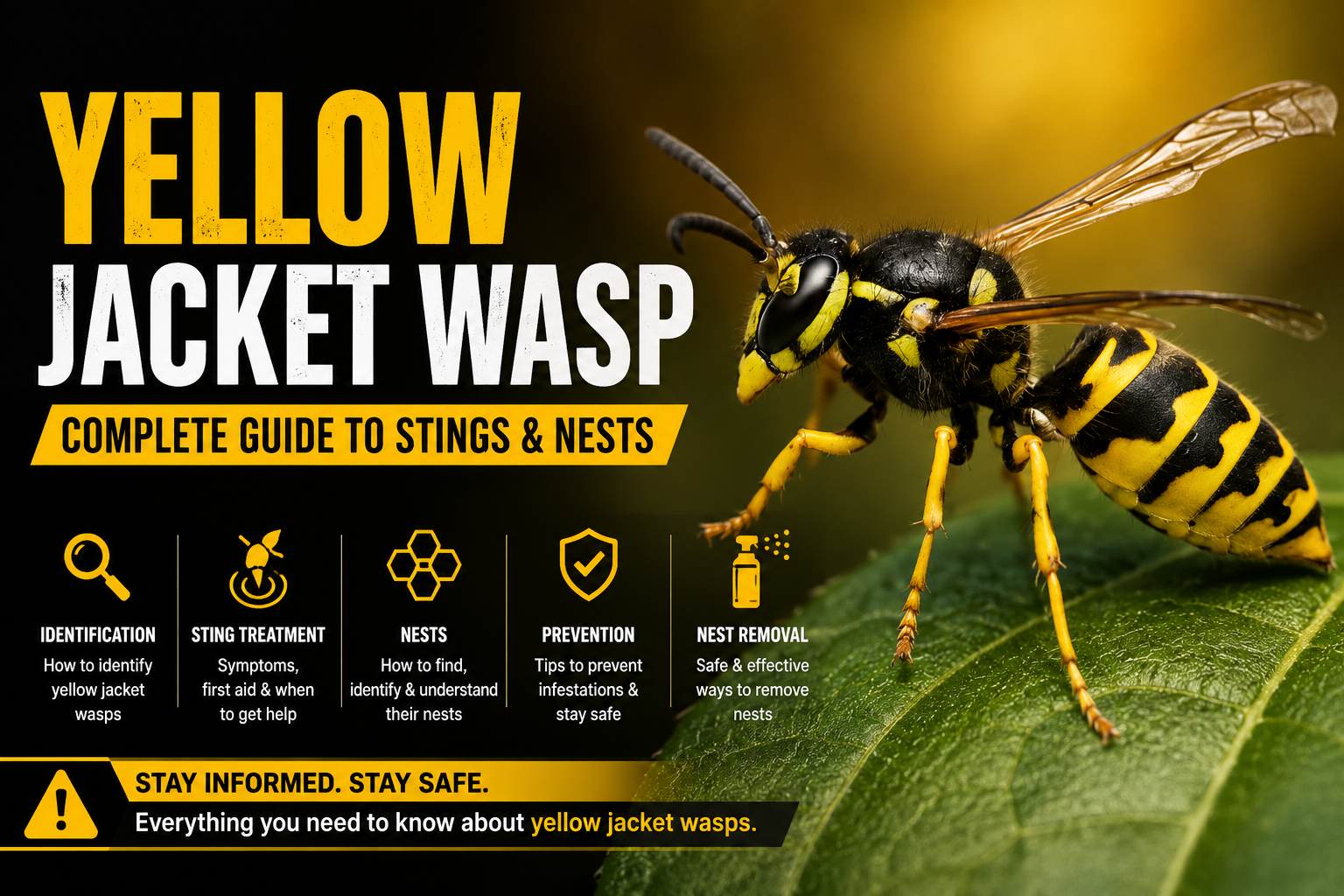
The yellow jacket wasp is one of the most recognizable and misunderstood stinging insects in North America. Known for its striking black-and-yellow markings and highly defensive nature, the yellow jacket wasp often becomes a nuisance during late summer and early fall. Unlike honey bees, yellow jackets can sting multiple times without losing their stinger, making encounters particularly painful and sometimes dangerous.
Whether you’ve spotted a yellow jacket nest in your yard, experienced a sting, or simply want to learn how to identify these insects, this comprehensive guide covers everything you need to know. From their behavior and habitat to sting treatment, nest identification, prevention strategies, and answers to frequently asked questions, this article provides practical, research-based information to help you stay safe.
What Is a Yellow Jacket Wasp?
A yellow jacket wasp is a social wasp belonging to the genera Vespula and Dolichovespula. These insects live in organized colonies with a queen, worker wasps, and reproductive males. Unlike bees, yellow jackets have smooth bodies and can sting repeatedly because their stingers do not become lodged in the skin.
Yellow jackets play an important role in ecosystems by controlling populations of flies, caterpillars, and other insects. However, they become a concern when they build nests near homes, parks, gardens, or outdoor dining areas.
Quick Facts
| Feature | Information |
|---|---|
| Scientific Group | Vespula and Dolichovespula |
| Color | Bright yellow and black |
| Average Length | 10–16 mm |
| Habitat | Underground burrows, wall voids, trees, shrubs |
| Diet | Insects, nectar, fruit, sugary foods, meat |
| Lifespan | Workers: Several weeks; Queen: Up to one year |
| Sting Ability | Multiple stings |
How to Identify a Yellow Jacket Wasp
Correct identification is essential because yellow jackets are often mistaken for honey bees or hornets.
Physical Characteristics
A yellow jacket wasp typically has:
- Bright yellow and black stripes
- Smooth, shiny body with little hair
- Narrow waist
- Folded wings when resting
- Strong, fast flight
Unlike fuzzy honey bees, yellow jackets have sleek bodies that allow them to move quickly while hunting prey.
Yellow Jacket Wasp vs Wasp vs Hornet
Many people confuse yellow jackets with other stinging insects.
| Feature | Yellow Jacket | Paper Wasp | Hornet |
|---|---|---|---|
| Body | Compact | Slender | Large |
| Nest | Underground or enclosed | Open paper nest | Large paper nest |
| Aggression | High | Moderate | High when disturbed |
| Sting | Multiple | Multiple | Multiple |
| Food | Insects and sweets | Insects | Insects |
Understanding these differences can help you respond appropriately when you encounter a nest.
Where Do Yellow Jackets Live?
Yellow jackets are highly adaptable and can establish colonies in various environments.
Common Nesting Locations
They commonly build nests:
- Underground rodent burrows
- Wall cavities
- Attics
- Crawl spaces
- Tree hollows
- Shrubs
- Sheds
- Decks
Some species construct aerial nests, while others prefer concealed underground locations.
What Do Yellow Jacket Wasps Eat?
Their diet changes throughout the season.
Protein Sources
Worker wasps hunt:
- Flies
- Caterpillars
- Spiders
- Crickets
- Beetles
These protein-rich foods feed developing larvae.
Sugary Foods
Adult yellow jackets consume:
- Flower nectar
- Ripe fruit
- Soft drinks
- Juice
- Candy
- Ice cream
This explains why they frequently gather around picnics and outdoor events during late summer.
Why Are Yellow Jacket Wasps So Aggressive?
One of Google’s most searched questions is:
Why are yellow jackets so aggressive?
Several factors contribute to their defensive behavior.
Colony Protection
Yellow jackets instinctively defend their queen and nest. Vibrations, loud noises, or accidental disturbances can trigger a mass attack.
Late Summer Food Shortages
Toward the end of summer, natural food sources decline. Workers aggressively search for sugary foods, increasing encounters with people.
Chemical Alarm Signals
When one yellow jacket stings, it releases alarm pheromones that alert nearby colony members, often resulting in multiple wasps attacking the same target.
How Dangerous Are Yellow Jacket Wasps?
How bad are yellow jacket wasps?
For most people, a sting causes temporary pain and swelling.
However, yellow jackets can become dangerous in certain situations.
Risks include:
- Multiple stings
- Severe allergic reactions
- Swelling around the face or throat
- Secondary infections from scratching
- Rare cases of anaphylaxis
Anyone experiencing difficulty breathing, dizziness, swelling of the tongue or throat, or loss of consciousness after a sting should seek emergency medical attention immediately.
Yellow Jacket Wasp Sting Symptoms
A sting typically causes:
- Sharp burning pain
- Redness
- Swelling
- Itching
- Tenderness
Symptoms usually improve within several hours to a few days.
What to Do If You Get Stung by a Yellow Jacket
Prompt first aid can reduce discomfort.
Step 1: Move Away
Leave the area immediately to avoid additional stings.
Step 2: Wash the Area
Clean the sting with soap and water.
Step 3: Apply a Cold Compress
Ice packs help reduce swelling and pain.
Step 4: Reduce Itching
Over-the-counter antihistamines or hydrocortisone cream may help relieve itching and irritation.
Step 5: Monitor for Allergic Reactions
Seek emergency medical care if symptoms include:
- Difficulty breathing
- Widespread hives
- Swelling of the lips or throat
- Fainting
- Chest tightness
What Kills Yellow Jackets Immediately?
Many homeowners search for fast solutions.
Effective options include:
Commercial Wasp Sprays
Aerosol wasp sprays are designed to eliminate yellow jackets from a safe distance when used according to the product instructions.
Insecticidal Dust
Dust formulations can be effective for underground nests because worker wasps carry the product deeper into the colony.
Professional Pest Control
For large or difficult-to-access nests, hiring a licensed pest control professional is the safest and most effective option.
Avoid pouring gasoline, bleach, or other hazardous chemicals into nests, as these methods are dangerous and can harm people, pets, and the environment.
How to Identify a Yellow Jacket Nest
Yellow jacket nests vary depending on the species.
Signs include:
- Constant wasp traffic entering a single hole
- Buzzing sounds inside walls
- Small entrance holes in the ground
- Gray paper-like nest material
Never disturb an active nest, especially during daylight hours when most workers are present.
How to Prevent Yellow Jacket Wasps
Prevention is often easier than removal.
Keep Food Covered
Seal food and sugary drinks during outdoor meals.
Secure Trash Bins
Use tightly fitting lids to reduce food odors.
Seal Entry Points
Repair cracks around your home’s exterior.
Inspect Your Yard
Look for early-season nest activity before colonies become large.
Remove Fallen Fruit
Rotting fruit attracts foraging workers.
Yellow Jacket Wasp Life Cycle
The colony develops in several stages.
Spring
A fertilized queen emerges from winter hibernation and begins building a new nest.
Summer
Worker populations grow rapidly as they forage for food and expand the colony.
Late Summer
The colony reaches peak size, often containing several thousand workers.
Fall
New queens and males leave the nest to mate. The original colony eventually dies as temperatures drop, while newly fertilized queens overwinter to start new colonies the following spring.
Are Yellow Jackets Beneficial?
Despite their reputation, yellow jackets provide several ecological benefits.
They help:
- Control agricultural pests
- Pollinate some flowering plants
- Reduce populations of flies and caterpillars
- Support natural ecosystem balance
Problems arise primarily when nests are located close to human activity.
Frequently Asked Questions
How bad are yellow jacket wasps?
Most stings cause temporary pain and swelling, but multiple stings or allergic reactions can become serious and require immediate medical attention.
What kills yellow jackets immediately?
Commercial wasp sprays, insecticidal dusts, and professional pest control services are commonly used for rapid and effective control.
What should you do if a yellow jacket stings you?
Move away from the area, wash the sting with soap and water, apply a cold compress, and monitor for signs of a severe allergic reaction.
Why are yellow jackets so aggressive?
They aggressively defend their nests, especially in late summer when food becomes scarce. Alarm pheromones released after a sting can also attract additional wasps.
Can yellow jackets sting more than once?
Yes. Unlike honey bees, yellow jackets have smooth stingers that allow them to sting repeatedly.
Do yellow jackets die after stinging?
No. They can sting multiple times without dying.
Where do yellow jackets build nests?
They commonly nest underground, inside wall voids, tree hollows, attics, sheds, and shrubs.
Final Thoughts
The yellow jacket wasp is an important part of nature, helping control insect populations and maintain ecological balance. However, its defensive behavior and ability to sting multiple times make it one of the most concerning stinging insects around homes and outdoor spaces.
Learning how to identify yellow jackets, recognize their nests, treat stings promptly, and prevent infestations can greatly reduce the risk of unpleasant encounters. If you discover a large or active nest near your home, avoid disturbing it and consider contacting a licensed pest control professional for safe removal. With the right knowledge and precautions, you can protect yourself and your family while respecting the role these insects play in the environment.