
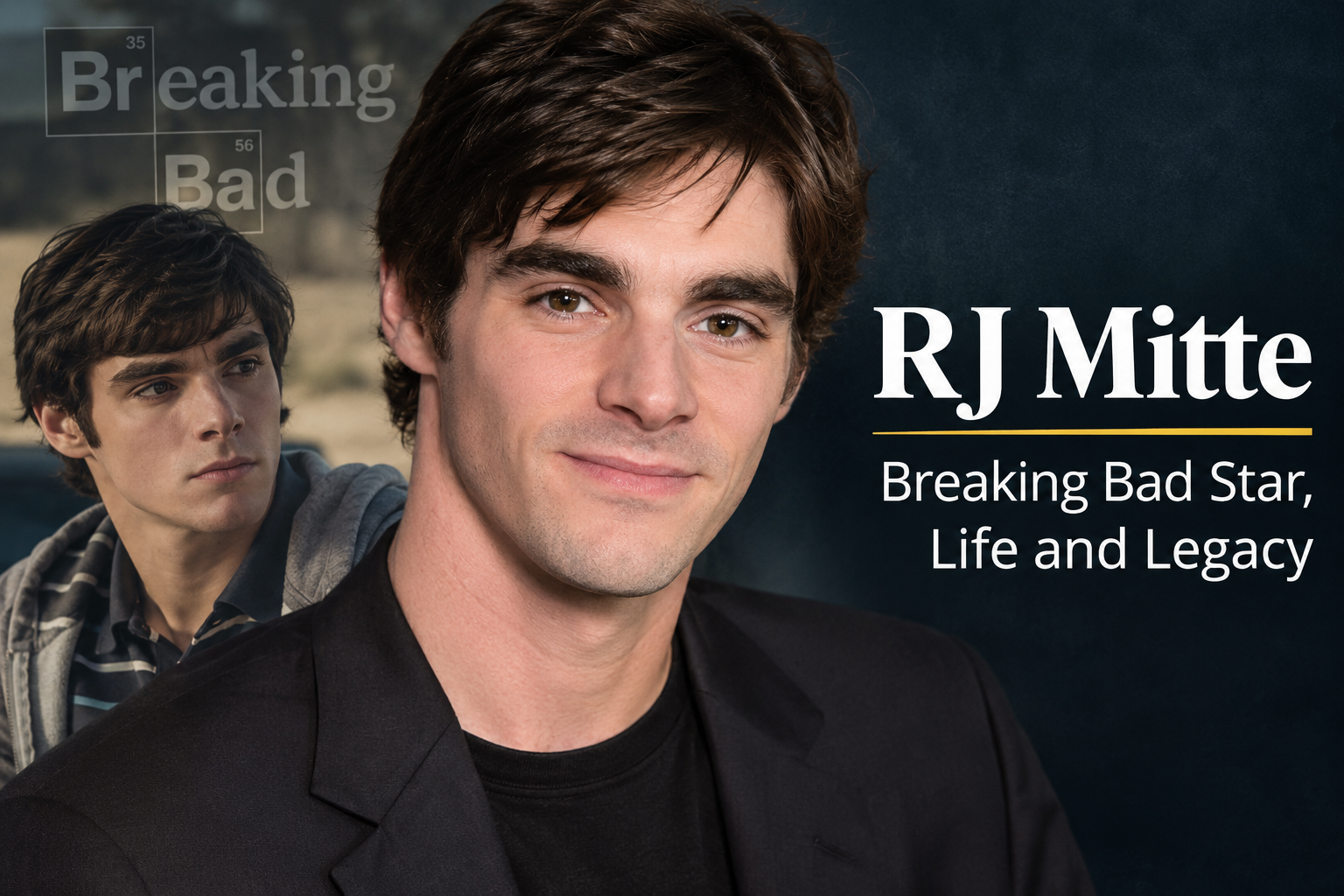
RJ Mitte became widely recognized for playing Walter White Jr., also known as Flynn, in the television drama Breaking Bad. His performance made him a familiar face to audiences around the world, but his career extended beyond the popular AMC series. He also appeared in other television productions and films while becoming an advocate for greater representation of people with disabilities in entertainment.
Mitte’s personal experience with cerebral palsy brought an additional perspective to his best-known role. Through his acting and public advocacy, he helped challenge assumptions about the opportunities available to performers with disabilities.
RJ Mitte died on October 12, 2026, at the age of 34. His work in television and his contribution to disability awareness remain important parts of his legacy.
Who Was RJ Mitte?
RJ Mitte, whose full name was Roy Frank Mitte III, was an American actor born on August 21, 1992, in Jackson, Mississippi. He became internationally known for portraying Walter White Jr. in Breaking Bad, the critically acclaimed television series created by Vince Gilligan.
Although the character was part of a fictional story about crime and family relationships, Walter Jr. became an important presence in the series. His relationship with his parents provided an emotional perspective on the consequences of Walter White’s decisions.
Mitte’s work was not limited to this role. He appeared in television dramas, independent films and other entertainment projects while also speaking publicly about disability inclusion and equal opportunities in Hollywood.
What Happened to RJ Mitte?
RJ Mitte died on October 12, 2026, at the age of 34. His representatives confirmed his death, which was reported by established news organizations.
The news prompted tributes from people who had worked with him, including members of the Breaking Bad cast. Bryan Cranston, who played his television father, remembered Mitte as a talented young actor and a person he had grown close to during and after the series.
Mitte’s death brought renewed attention to his acting career and his work supporting disability representation. Rather than being remembered only for one television character, his legacy also includes his efforts to encourage greater inclusion in the entertainment industry.
What Role Did RJ Mitte Play in Breaking Bad?
RJ Mitte played Walter White Jr., also known as Flynn, in Breaking Bad. He was the son of Walter White, played by Bryan Cranston, and Skyler White, played by Anna Gunn.
The series follows Walter, a chemistry teacher who begins manufacturing illegal drugs after receiving a serious medical diagnosis. As his criminal activities become increasingly dangerous, the consequences affect his wife, son and the people around him.
Walter Jr. provides an important family perspective throughout the story. He initially sees his father as a caring parent and struggles to understand the growing conflict between his parents.
His character also has cerebral palsy, a condition that Mitte experienced in real life. This connection helped bring an additional level of authenticity to the portrayal, although the character’s individual experiences were written specifically for the series.
Breaking Bad originally aired from 2008 to 2013 and ran for five seasons. Mitte appeared throughout the show’s run, becoming closely associated with one of television’s most recognized dramas.
Did RJ Mitte Have Cerebral Palsy in Real Life?
Yes. RJ Mitte had cerebral palsy, a group of conditions that affect movement, muscle tone and coordination. The condition affects individuals differently, and its impact can range from relatively mild to more significant physical limitations.
Mitte’s experience with cerebral palsy was relevant to his casting as Walter White Jr. However, he did not simply reproduce his everyday physical experience for the role. He adapted aspects of his movement and speech to portray the fictional character.
His performance helped bring greater visibility to a character with a disability in a major television production. It also contributed to conversations about authentic representation and the importance of giving actors with disabilities opportunities to play substantial roles.
The distinction between an actor’s real-life experience and a fictional character is important. Walter Jr. had his own personality, family relationships and storyline beyond his disability.
RJ Mitte’s Acting Career Beyond Breaking Bad
Although Breaking Bad remained Mitte’s best-known project, he continued working in television and film beyond the series.
Some of his other acting credits included:
- Switched at Birth: Mitte appeared in the family drama, which explored relationships, identity and communication.
- The Oak Room: A film that formed part of his work outside mainstream television.
- Triumph (2021): A coming-of-age sports drama in which he played Mike, a student with cerebral palsy who wants to join his school’s wrestling team.
- Standing Up for Sunny (2019): An Australian romantic comedy in which he played a stand-up comedian.
- The Guardians of Justice: An animated superhero series featuring a different style of storytelling from his earlier television work.
These projects demonstrated his interest in exploring different characters and genres rather than remaining associated exclusively with Walter White Jr.
His career also included opportunities outside traditional acting. He participated in fashion projects, public appearances and discussions about representation in entertainment.
RJ Mitte and Disability Representation in Hollywood
One of the most significant parts of Mitte’s public work was his advocacy for people with disabilities.
Actors with disabilities have historically faced barriers in the entertainment industry, including limited casting opportunities, assumptions about their abilities and a lack of accessible working environments.
Mitte used his public profile to encourage more inclusive casting and greater opportunities for performers with disabilities. His work helped draw attention to the difference between simply including disability in a storyline and allowing people with disabilities to participate meaningfully in the production of entertainment.
He was associated with organizations including United Cerebral Palsy and Shriners Children’s. He also supported initiatives focused on disability awareness, accessibility and representation.
His advocacy was closely connected to his own professional experience. By working in a major television production and taking on different roles, he demonstrated that an actor with a disability could participate in a wide range of stories and characters.
Awards and Recognition
Mitte received recognition for both his acting and his advocacy work.
In 2014, he shared a Screen Actors Guild Award with the Breaking Bad cast for Outstanding Performance by an Ensemble in a Drama Series. The award recognized the work of the show’s ensemble rather than an individual acting performance.
He also received the SAG-AFTRA Harold Russell Award in 2013 for his contributions to disability representation and opportunities for performers with disabilities.
These recognitions reflected two important aspects of his career: his participation in a highly successful television series and his efforts to encourage greater inclusion in the entertainment industry.
RJ Mitte’s Legacy
RJ Mitte’s legacy extends beyond his portrayal of Walter White Jr. in Breaking Bad.
For television audiences, he will remain closely associated with a character whose family experiences became central to the show’s emotional story. For people interested in disability representation, his career also demonstrated the value of creating opportunities for performers with disabilities.
His work helped challenge narrow expectations about the types of roles disabled actors can play. He supported greater visibility, more inclusive casting and the idea that a disability should not define the limits of someone’s professional opportunities.
Mitte died at 34, leaving behind a body of work that included television, film and advocacy. His performances and public contributions continue to be remembered by audiences and people working toward greater representation in entertainment.
Frequently Asked Questions About RJ Mitte
How old was RJ Mitte when he died?
RJ Mitte was 34 years old when he died on October 12, 2026. He was born on August 21, 1992.
What was RJ Mitte famous for?
He was best known for playing Walter White Jr., also called Flynn, in the AMC television series Breaking Bad.
Who played Walter White Jr. in Breaking Bad?
RJ Mitte played Walter White Jr., the son of Walter and Skyler White. His performance appeared throughout the show’s five seasons.
Did RJ Mitte have cerebral palsy?
Yes. Mitte had cerebral palsy in real life, as did his character in Breaking Bad. He used his professional experience and public platform to support greater disability awareness and representation.
What other TV shows and films did RJ Mitte appear in?
Beyond Breaking Bad, his credits included Switched at Birth, The Guardians of Justice, The Oak Room, Triumph and Standing Up for Sunny.
Did RJ Mitte receive any awards?
He shared a Screen Actors Guild Award with the Breaking Bad ensemble in 2014. He also received the SAG-AFTRA Harold Russell Award in 2013 for his contribution to disability representation.
Was RJ Mitte involved in disability advocacy?
Yes. He supported disability awareness and more inclusive opportunities for performers. His work was associated with organizations including United Cerebral Palsy and Shriners Children’s.
Where can readers find reliable information about RJ Mitte?
Readers can consult the official AMC cast profile, the Television Academy’s biography and established news organizations for verified information about his career and life.
Final Thoughts
RJ Mitte built a recognizable acting career through his portrayal of Walter White Jr. in Breaking Bad, but his contributions extended beyond the television screen. His work in other productions and his support for disability inclusion helped bring attention to the opportunities and challenges facing performers with disabilities.
His career remains an example of how representation in entertainment can influence public understanding and encourage more inclusive opportunities for future generations of actors.
Sources and Further Reading: