
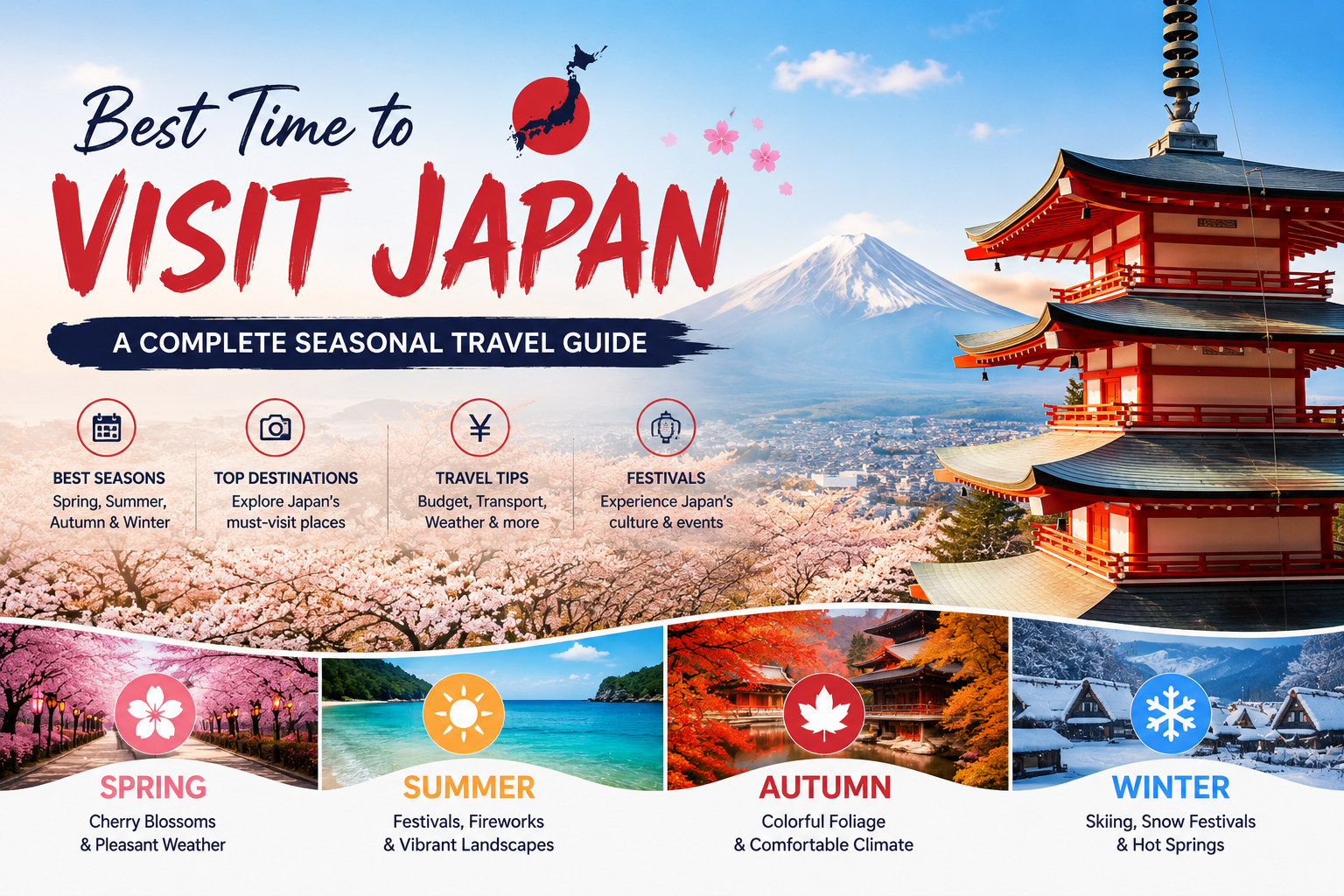
Planning a trip to Japan? Knowing the best time to visit Japan can make a significant difference in your travel experience. Japan is a year-round destination, offering breathtaking cherry blossoms in spring, vibrant festivals in summer, colorful autumn foliage, and world-class skiing in winter. Each season has its own charm, attractions, and travel costs.
Whether you’re visiting Tokyo’s bustling streets, Kyoto’s historic temples, Osaka’s food scene, or Hokkaido’s snowy mountains, this comprehensive guide will help you choose the perfect season based on your interests, budget, and itinerary.
Why Timing Matters When Visiting Japan
Japan experiences four distinct seasons, each offering unique landscapes and activities. Choosing the right time depends on what you want to experience.
Benefits of visiting during the ideal season include:
- Pleasant weather
- Fewer crowds
- Lower accommodation costs
- Seasonal festivals
- Better photography opportunities
- Unique cultural experiences
Understanding seasonal differences allows you to maximize your trip.
Spring (March to May)
Why Spring Is the Most Popular Season
Spring is widely considered the best time to visit Japan because of its famous cherry blossoms, known as Sakura.
Average temperatures range from 10°C to 22°C (50°F–72°F), making sightseeing comfortable.
Highlights
- Cherry blossom viewing
- Hanami picnics
- Mild weather
- Beautiful gardens
- Traditional festivals
Best Places
- Tokyo
- Kyoto
- Osaka
- Nara
- Hiroshima
Things to Know
Spring is also the busiest tourist season. Hotels and flights should be booked several months in advance.
Summer (June to August)
What to Expect
Summer brings warm temperatures, festivals, fireworks, and lush landscapes.
Temperatures often exceed 30°C (86°F) in many cities.
Advantages
- Spectacular fireworks festivals
- Hiking season
- Beach vacations
- Mountain adventures
- Vibrant nightlife
Popular Summer Destinations
- Okinawa
- Mount Fuji
- Hokkaido
- Tokyo
- Osaka
Considerations
June marks Japan’s rainy season in many regions, while July and August can be hot and humid.
Autumn (September to November)
One of the Best Times to Visit Japan
Autumn offers comfortable weather and stunning fall foliage.
Average temperatures range between 12°C and 24°C (54°F–75°F).
Why Travelers Love Autumn
- Colorful maple leaves
- Comfortable temperatures
- Scenic temples
- Fewer crowds than spring
- Seasonal cuisine
Top Destinations
- Kyoto
- Nikko
- Hakone
- Tokyo
- Japanese Alps
Autumn is perfect for photography and outdoor exploration.
Winter (December to February)
A Paradise for Snow Lovers
Winter transforms northern Japan into one of the world’s top ski destinations.
Winter Activities
- Skiing
- Snowboarding
- Hot springs (Onsen)
- Snow festivals
- Illuminations
Best Winter Destinations
- Hokkaido
- Niseko
- Sapporo
- Nagano
- Hakuba
Winter is also an excellent time to experience Japanese hot springs surrounded by snow.
Best Time to Visit Japan for Cherry Blossoms
Cherry blossom season varies by region.
Typical blooming periods include:
- Tokyo: Late March to Early April
- Kyoto: Late March to Early April
- Osaka: Early April
- Hokkaido: Late April to Early May
Bloom dates change each year depending on weather conditions.
Best Time to Visit Japan on a Budget
If you’re looking to save money, consider traveling during:
- January (after New Year)
- Late May
- September
- Early December
These periods often feature:
- Lower hotel prices
- Discounted flights
- Smaller crowds
- Easier sightseeing
Avoid Golden Week, Obon, and New Year holidays if you’re traveling on a budget.
Japan’s Major Festivals
Some of the country’s most famous festivals include:
Spring
- Cherry Blossom Festivals
Summer
- Gion Matsuri
- Nebuta Festival
- Sumida River Fireworks
Autumn
- Jidai Matsuri
- Takayama Autumn Festival
Winter
- Sapporo Snow Festival
- Yokote Kamakura Festival
Planning your visit around a festival adds a memorable cultural experience.
Travel Tips for First-Time Visitors
Before traveling to Japan:
- Purchase a transportation pass if appropriate for your itinerary.
- Carry some cash, as smaller businesses may not accept cards.
- Learn basic Japanese greetings.
- Respect local customs and etiquette.
- Download offline maps and translation apps.
- Book accommodations early during peak seasons.
Frequently Asked Questions
What is the best month to visit Japan?
April and November are often considered the best months due to pleasant weather and beautiful scenery.
When is cherry blossom season in Japan?
Cherry blossoms usually bloom from late March to early April in central Japan, with timing varying by region.
What is the cheapest time to visit Japan?
January (after New Year), late May, September, and early December generally offer lower travel costs.
Is Japan worth visiting in winter?
Yes. Winter is ideal for skiing, snow festivals, hot springs, and fewer tourist crowds.
How many days should I spend in Japan?
A trip of 10–14 days is ideal for exploring major cities like Tokyo, Kyoto, Osaka, and nearby attractions.
Final Thoughts
Choosing the best time to visit Japan depends on your travel goals. Spring offers iconic cherry blossoms, summer features lively festivals and outdoor adventures, autumn showcases breathtaking foliage, and winter delivers world-class skiing and relaxing hot springs. Every season provides a unique perspective on Japan’s rich culture, history, and natural beauty.
No matter when you visit, careful planning, early bookings during peak seasons, and a well-designed itinerary will help you make the most of your journey. From bustling cityscapes to peaceful temples and scenic countryside, Japan offers unforgettable experiences for every type of traveler.