
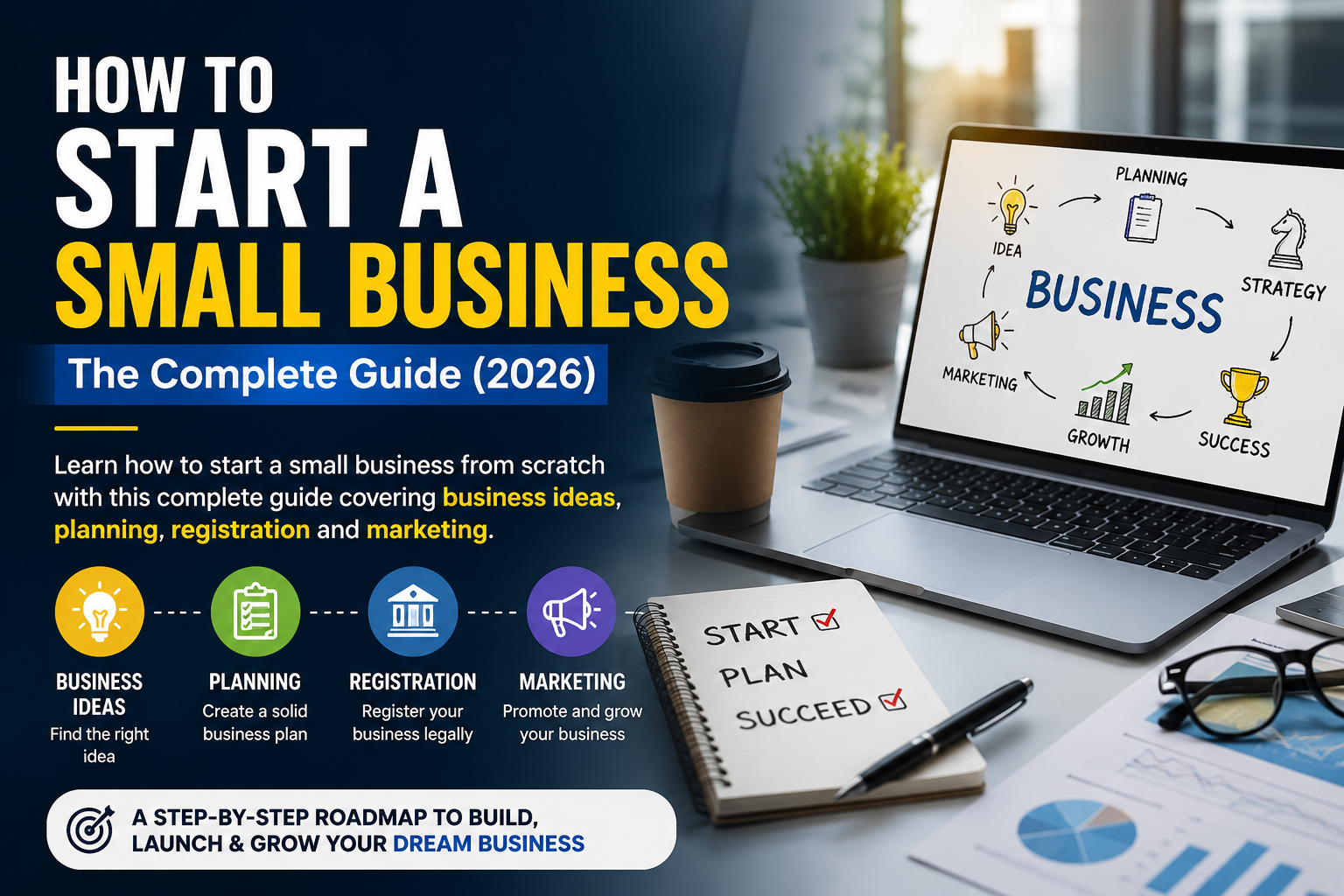
Starting your own company is one of the most rewarding ways to build financial independence and create long-term wealth. Whether you’re launching an online store, opening a local service business, or building a digital brand, learning how to start a small business is the first step toward turning your ideas into reality.
Many successful entrepreneurs began with little more than a vision and determination. However, building a profitable business requires careful planning, market research, financial management, and consistent execution. This comprehensive guide explains every step of the process, helping beginners confidently start and grow a successful small business.
Why Start a Small Business?
Owning a small business offers opportunities that traditional employment may not provide.
Benefits include:
- Financial independence
- Flexible work schedule
- Unlimited income potential
- Personal satisfaction
- Building long-term assets
- Creating employment opportunities
- Greater career control
Although entrepreneurship involves challenges, proper planning significantly improves your chances of success.
Find the Right Business Idea
Every successful business begins with solving a problem.
Ask yourself:
- What skills do I already have?
- What problems can I solve?
- What products are in demand?
- What services are people willing to pay for?
- Can this business scale?
Popular Small Business Ideas
- E-commerce store
- Digital marketing agency
- Freelance writing
- Graphic design
- Online coaching
- Consulting
- Affiliate marketing
- Blogging
- Local home services
- Web development
Choose an idea that aligns with your expertise and market demand.
Research Your Market
Before investing money, understand your target audience.
Research:
Customer Needs
Identify:
- Pain points
- Buying habits
- Income level
- Preferred communication channels
Competitor Analysis
Study competitors by evaluating:
- Pricing
- Products
- Customer reviews
- Website quality
- Marketing strategies
- Social media presence
Understanding competitors helps you identify gaps in the market.
Write a Business Plan
A business plan acts as your roadmap.
Include:
Executive Summary
Explain your business concept.
Products or Services
Describe what you’ll sell.
Target Market
Define your ideal customers.
Marketing Strategy
Explain how customers will find you.
Financial Plan
Estimate:
- Startup costs
- Revenue
- Expenses
- Profit margins
- Cash flow
A solid business plan also helps attract investors or secure financing.
Register Your Business
Legal registration depends on your country and business structure.
Common structures include:
- Sole Proprietorship
- Partnership
- Limited Liability Company (LLC)
- Corporation
You may also need:
- Business licenses
- Tax registration
- Employer identification numbers
- Industry-specific permits
Always verify local legal requirements before operating.
Build Your Brand
A professional brand creates trust.
Develop:
Business Name
Choose a memorable and relevant name.
Logo
Keep it simple, timeless, and recognizable.
Brand Colors
Maintain consistency across your website and marketing materials.
Brand Voice
Decide whether your communication style will be professional, friendly, or educational.
Strong branding helps customers remember your business.
Create a Professional Website
Today, every business needs an online presence.
Your website should include:
- Homepage
- About Us
- Services or Products
- Contact Page
- Privacy Policy
- Terms & Conditions
- Blog
Ensure your website is:
- Mobile-friendly
- Fast-loading
- Secure (HTTPS)
- Easy to navigate
Publishing valuable blog content also supports long-term SEO and organic traffic growth.
Develop a Marketing Strategy
Without marketing, even the best products remain undiscovered.
Search Engine Optimization (SEO)
Optimize your website to rank for relevant keywords and attract organic traffic.
Social Media Marketing
Build relationships through platforms like:
- TikTok
- X
Email Marketing
Collect email subscribers and send:
- Newsletters
- Promotions
- Product updates
Content Marketing
Publish helpful articles, guides, videos, and tutorials that answer customer questions and establish your expertise.
Manage Your Finances
Financial discipline is essential for long-term success.
Track:
- Income
- Expenses
- Taxes
- Inventory
- Cash flow
- Profit margins
Accounting software can simplify financial management and improve decision-making.
Deliver Excellent Customer Service
Satisfied customers become repeat buyers and brand advocates.
Focus on:
- Fast responses
- Honest communication
- Reliable support
- High-quality products
- Easy return policies
Positive customer experiences encourage referrals and strengthen your reputation.
Common Mistakes to Avoid
Many new entrepreneurs make avoidable mistakes.
Avoid:
- Skipping market research
- Ignoring customer feedback
- Underpricing products
- Overspending early
- Neglecting SEO
- Poor financial planning
- Trying to target everyone
Learning from these mistakes can save both time and money.
How to Grow Your Small Business
Growth requires continuous improvement.
Consider:
- Expanding product lines
- Hiring employees
- Investing in automation
- Improving customer retention
- Building strategic partnerships
- Entering new markets
- Using data to guide decisions
Sustainable growth comes from consistent optimization rather than rapid expansion.
Frequently Asked Questions
How much money do I need to start a small business?
Startup costs vary widely depending on the business type. Some online businesses can begin with a modest investment, while retail or manufacturing businesses typically require more capital.
What is the easiest business to start?
Service-based businesses such as freelancing, consulting, digital marketing, and online coaching often have lower startup costs and can be launched quickly.
Do I need a business plan?
Yes. A business plan helps you define goals, organize finances, and make informed decisions. It is also valuable when seeking investors or loans.
Can I start a business while working full-time?
Yes. Many entrepreneurs begin their businesses as side projects before transitioning to full-time ownership once they generate consistent income.
What is the biggest challenge for new businesses?
Common challenges include acquiring customers, managing cash flow, and building brand awareness. Careful planning and consistent marketing can help overcome these obstacles.
Final Thoughts
Learning how to start a small business is the foundation of a successful entrepreneurial journey. While launching a business requires dedication, planning, and persistence, the rewards can be significant. By choosing the right idea, researching your market, creating a solid business plan, building a strong online presence, and focusing on customer satisfaction, you can establish a business that grows sustainably over time.
Success rarely happens overnight, but consistent effort, continuous learning, and a willingness to adapt will help you navigate challenges and seize new opportunities. Whether you’re starting a local service, an online store, or a digital business, taking the first step today can set the stage for long-term success.