
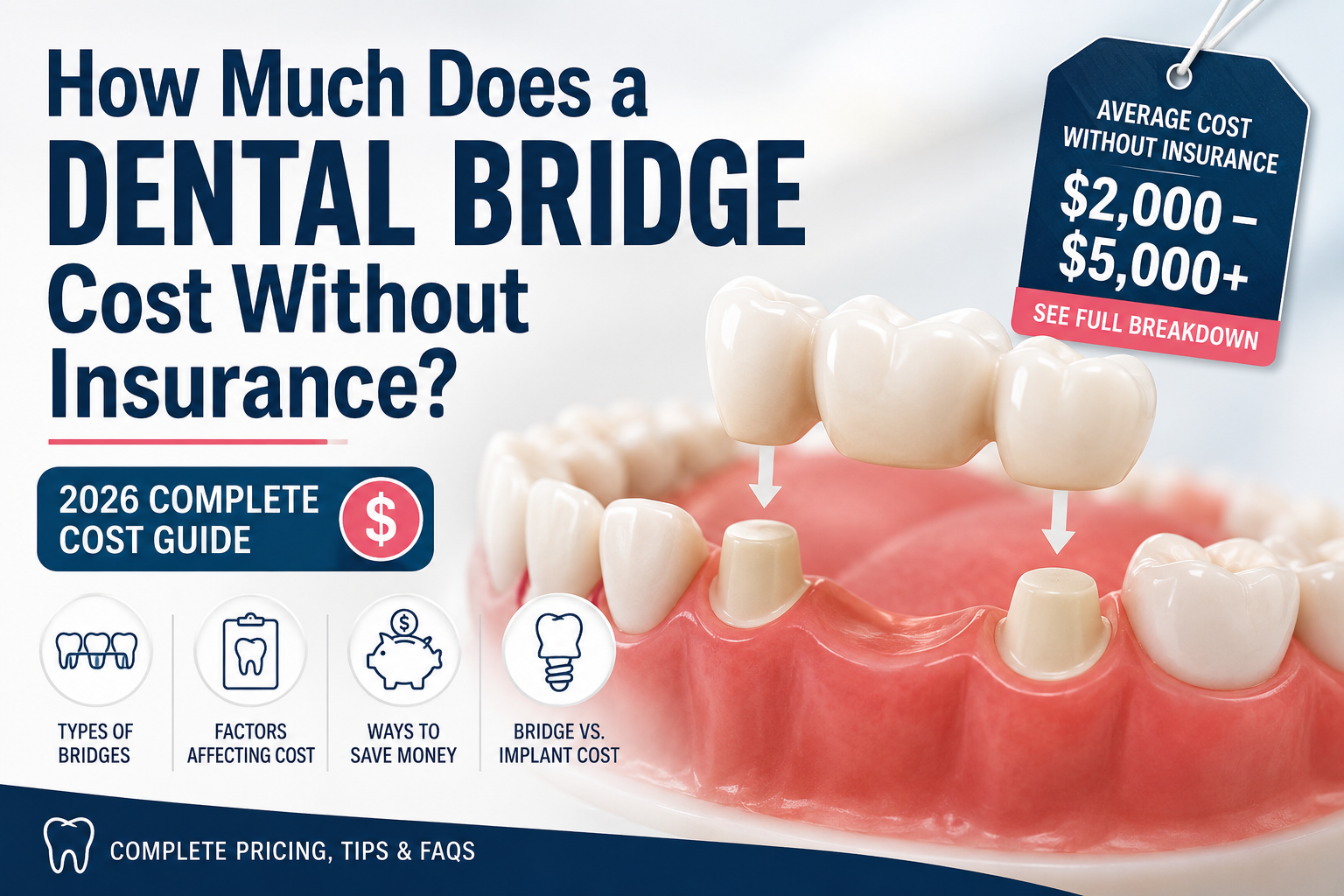
Missing one or more teeth can affect your smile, confidence, and ability to eat comfortably. One of the most common questions people ask is how much does a dental bridge cost without insurance. The answer depends on several factors, including the type of bridge, the number of missing teeth, your location, and the material used.
On average, a dental bridge costs between $2,000 and $5,000 without insurance for a traditional three-unit bridge. More advanced options, such as implant-supported bridges, can cost significantly more. Understanding these costs beforehand can help you budget wisely and choose the best treatment for your oral health.
In this guide, we’ll explain everything you need to know about how much does a dental bridge cost without insurance, what influences the price, and practical ways to save money.
Average Dental Bridge Cost Without Insurance
The average cost varies depending on the type of dental bridge you choose.
| Dental Bridge Type | Average Cost Without Insurance |
|---|---|
| Traditional Bridge | $2,000 – $5,000 |
| Maryland Bridge | $1,500 – $3,000 |
| Cantilever Bridge | $2,000 – $5,000 |
| Implant-Supported Bridge | $5,000 – $15,000+ |
These estimates usually include the bridge itself and the crowns used to anchor it. However, they may not include consultations, X-rays, tooth extractions, bone grafts, or other preparatory procedures.
What Is a Dental Bridge?
A dental bridge is a fixed dental restoration designed to replace one or more missing teeth. Instead of leaving an empty space, a bridge fills the gap using artificial teeth supported by adjacent natural teeth or dental implants.
A dental bridge can help:
- Restore your smile
- Improve chewing ability
- Prevent neighboring teeth from shifting
- Maintain proper facial structure
- Improve speech
Unlike dentures, dental bridges are permanently fixed and cannot be removed at home.
Types of Dental Bridges and Their Costs
Traditional Dental Bridge
A traditional bridge is the most common option. It uses crowns placed on the teeth adjacent to the missing tooth, with an artificial tooth (pontic) suspended between them.
Average Cost
- $2,000–$5,000
Best For
- Replacing one or two missing teeth
- Patients with healthy neighboring teeth
Pros
- Durable
- Natural appearance
- Long lifespan with proper care
Cons
- Requires reshaping healthy teeth
- May eventually need replacement
Maryland Dental Bridge
A Maryland bridge uses a metal or porcelain framework bonded to the back of nearby teeth instead of crowns.
Average Cost
- $1,500–$3,000
Best For
- Front teeth
Pros
- Less invasive
- Preserves healthy teeth
- Lower cost
Cons
- Less durable
- Not ideal for molars
Cantilever Bridge
A cantilever bridge is supported by only one adjacent tooth.
Average Cost
- $2,000–$5,000
Best For
- Areas with limited support
Pros
- Useful when only one supporting tooth exists
Cons
- Places extra stress on the supporting tooth
- Less commonly recommended
Implant-Supported Dental Bridge
Instead of relying on natural teeth, this bridge is anchored by dental implants surgically placed into the jawbone.
Average Cost
- $5,000–$15,000+
Although it’s the most expensive option, it often provides the best long-term results.
Pros
- Extremely durable
- Prevents bone loss
- Doesn’t affect neighboring teeth
- Can last decades
Cons
- Higher upfront cost
- Requires oral surgery
- Longer treatment timeline
Why Are Dental Bridges So Expensive?
If you’re wondering how much does a dental bridge cost without insurance, it’s important to understand what you’re paying for.
Several components contribute to the overall price:
- Initial dental examination
- Digital X-rays
- Tooth preparation
- Temporary bridge
- Permanent bridge fabrication
- Dental laboratory fees
- Dentist’s expertise
- Follow-up appointments
High-quality materials and experienced dentists generally result in higher costs but often provide better durability and aesthetics.
Factors That Affect Dental Bridge Costs
No two dental bridge procedures are exactly the same. Several factors influence the final cost.
Number of Missing Teeth
Replacing one missing tooth costs less than replacing multiple teeth. Larger bridges require additional materials and more extensive work.
Material Used
Different materials come with different price points.
Common materials include:
- Porcelain
- Zirconia
- Porcelain fused to metal (PFM)
- Gold alloys
- Ceramic
Zirconia and all-ceramic bridges generally cost more but offer excellent aesthetics and strength.
Dentist’s Experience
Highly experienced prosthodontists and cosmetic dentists often charge more due to their advanced training and expertise.
Geographic Location
Dental treatment costs vary significantly depending on where you live. Urban areas with a higher cost of living typically have higher dental fees than smaller towns or rural locations.
Laboratory Fees
Most dental bridges are custom-made in specialized dental laboratories. Premium labs using advanced technology may charge higher fabrication fees, which are reflected in the total treatment cost.
Additional Costs You Should Expect
When calculating how much does a dental bridge cost without insurance, it’s important to look beyond the bridge itself. Many patients are surprised to learn that the total cost may include several additional procedures before the bridge can be placed.
Here are some common extra expenses:
| Procedure | Average Cost |
|---|---|
| Initial Dental Consultation | $50–$250 |
| Dental X-Rays | $25–$250 |
| 3D CBCT Scan | $150–$600 |
| Tooth Extraction (if needed) | $150–$600 per tooth |
| Root Canal Treatment | $700–$1,800 |
| Temporary Bridge | $300–$1,000 |
| Bone Graft (implant cases) | $300–$3,000 |
If your supporting teeth are healthy, your overall cost may stay closer to the lower end of the price range.
Does Dental Insurance Cover Dental Bridges?
Yes, many dental insurance plans cover bridges, but they usually don’t pay the entire cost.
Most plans classify dental bridges as a major restorative procedure, meaning they’ll often cover around 50% of the cost after you’ve met your deductible. However, coverage depends on your policy, annual maximum benefit, and waiting periods.
If you don’t have insurance, you’ll be responsible for paying the full amount yourself, which is why many people search for how much does a dental bridge cost without insurance before scheduling treatment.
How to Save Money on a Dental Bridge Without Insurance
Although dental bridges can be expensive, there are several ways to reduce your out-of-pocket costs.
1. Compare Prices
Dental offices often charge different fees for the same procedure. Request treatment estimates from several local dentists before making a decision.
2. Visit a Dental School
Dental schools provide treatment performed by supervised students at significantly reduced prices.
This can save you hundreds—or even thousands—of dollars while still receiving quality care.
3. Ask About Payment Plans
Many dental offices offer financing options that allow you to spread payments over several months instead of paying the full amount upfront.
Some clinics also partner with healthcare financing providers.
4. Look for Discount Dental Plans
Unlike traditional insurance, dental discount plans offer reduced treatment costs in exchange for an annual membership fee.
Savings often range from 10% to 60% depending on the procedure and provider.
5. Choose the Right Material
Premium materials like zirconia and all-ceramic bridges provide excellent aesthetics but cost more.
If appearance isn’t your highest priority, porcelain-fused-to-metal (PFM) bridges may offer a more budget-friendly alternative.
6. Maintain Good Oral Health
Preventive dental care reduces the likelihood of needing additional treatments such as root canals or extractions before receiving a bridge.
Regular cleanings and checkups can save significant money over time.
Dental Bridge vs. Dental Implant: Which Costs More?
Many people compare bridges and implants before deciding on treatment.
| Feature | Dental Bridge | Dental Implant |
|---|---|---|
| Average Cost | $2,000–$5,000 | $3,000–$6,000 per tooth |
| Surgery Required | No | Yes |
| Treatment Time | 2–4 weeks | 3–9 months |
| Lifespan | 10–15 years | 20+ years (often longer) |
| Bone Preservation | No | Yes |
| Maintenance | Moderate | Moderate |
A bridge generally has a lower upfront cost, making it attractive for patients without insurance.
However, implants may be more cost-effective over the long term because they typically last longer and help preserve jawbone health.
Is a Dental Bridge Worth the Cost?
For many patients, the answer is yes.
Replacing missing teeth isn’t only about appearance—it also protects your long-term oral health.
A dental bridge can:
- Restore your ability to chew properly
- Improve speech
- Prevent neighboring teeth from shifting
- Maintain proper bite alignment
- Restore confidence when smiling
- Improve facial appearance by supporting facial structure
Ignoring missing teeth can eventually lead to more expensive dental problems, including gum disease, tooth movement, bite issues, and bone loss.
How Long Does a Dental Bridge Last?
A well-made dental bridge generally lasts between 10 and 15 years.
With excellent oral hygiene and regular dental visits, many bridges remain functional for 20 years or longer.
Factors affecting lifespan include:
- Daily brushing and flossing
- Quality of the bridge
- Material used
- Diet
- Teeth grinding (bruxism)
- Regular dental checkups
Avoid chewing ice, hard candy, or other very hard foods, as these habits can shorten the life of your bridge.
How to Care for Your Dental Bridge
Proper maintenance protects your investment and extends the life of your restoration.
Follow these tips:
- Brush twice daily using fluoride toothpaste.
- Floss underneath the bridge using a floss threader or water flosser.
- Visit your dentist every six months.
- Avoid using your teeth to open packages.
- Wear a night guard if you grind your teeth.
- Limit sugary snacks and acidic drinks.
Good oral hygiene also helps prevent decay in the supporting teeth, which are essential for the bridge’s stability.
Frequently Asked Questions (FAQs)
How much does a dental bridge cost without insurance for one tooth?
The average cost to replace one missing tooth with a traditional three-unit dental bridge ranges from $2,000 to $5,000 without insurance. The final price depends on your location, the dentist’s experience, and the material used.
Is a dental bridge cheaper than a dental implant?
Yes. A dental bridge usually has a lower upfront cost than a dental implant. While a bridge generally costs $2,000–$5,000, a single dental implant can cost $3,000–$6,000 or more. However, implants often last longer and may require fewer future replacements.
How long does a dental bridge last?
Most dental bridges last 10 to 15 years, although many can remain in excellent condition for 20 years or more with proper oral hygiene and routine dental checkups.
Can I finance a dental bridge without insurance?
Yes. Many dental offices offer monthly payment plans or third-party financing options that allow patients to spread treatment costs over time. Some clinics also provide in-house financing with little or no interest.
Does Medicare pay for dental bridges?
Original Medicare generally does not cover routine dental procedures such as dental bridges. However, some Medicare Advantage plans may offer limited dental benefits, including bridge coverage.
Are dental bridges permanent?
Dental bridges are considered a fixed restoration, meaning they are permanently attached and cannot be removed at home like dentures. However, they may eventually need replacement due to normal wear or changes in oral health.
What is the least expensive type of dental bridge?
A Maryland dental bridge is often the most affordable option, typically costing $1,500 to $3,000 without insurance. However, it is usually recommended for replacing front teeth rather than molars.
Can I replace multiple missing teeth with one bridge?
Yes. Dental bridges can replace several consecutive missing teeth, provided there are enough healthy supporting teeth or implants. Larger bridges generally cost more because they require additional materials and laboratory work.
Is getting a dental bridge painful?
Most patients experience little to no pain during the procedure because local anesthesia is used. Mild soreness or sensitivity afterward is common but usually resolves within a few days.
Should I get a bridge or an implant?
The best option depends on your oral health, budget, and long-term goals. A bridge offers a lower initial cost and faster treatment, while an implant provides greater durability and helps preserve jawbone health. Your dentist can recommend the most suitable treatment after evaluating your condition.
Final Thoughts
If you’re wondering how much does a dental bridge cost without insurance, expect to pay between $2,000 and $5,000 for a traditional bridge, while more advanced options such as implant-supported bridges can cost $5,000 to $15,000 or more.
Although the price may seem high, replacing missing teeth is an investment in your oral health. A dental bridge can restore your smile, improve chewing and speech, prevent neighboring teeth from shifting, and reduce the risk of future dental complications.
Before committing to treatment, compare quotes from multiple dentists, ask about financing options, and discuss the materials best suited to your needs. Choosing an experienced dentist and maintaining excellent oral hygiene can help ensure your bridge lasts for many years.